
Copyright © 2022 Adewo Automation Equipment Co.,ltd. All rights Reserved.
Links Sitemap RSS XML Privacy Policy

In today’s fast-moving world, customers expect packages to arrive quickly, accurately, and at a reasonable cost. Packaging factories sit at the heart of this process. They prepare products for shipment, but the journey from factory to customer door has long been slow and expensive.
Now, autonomous delivery — using self-driving vehicles, drones, and robots — is changing everything. By connecting packaging lines directly with unmanned delivery systems, factories can move goods faster, cheaper, and more sustainably than ever before. This integration is reshaping supply chains for the better.
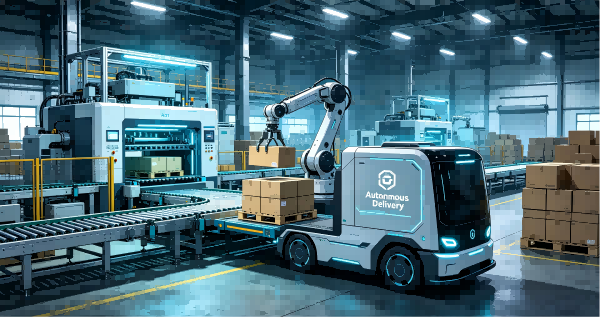
The integration is simpler than it sounds. Modern packaging factories use sensors, computers, and robots. These connect smoothly with autonomous delivery systems.
Here is a basic flow:
1. Smart Packaging: Products are packed using automated machines. Sensors check the weight, size, and condition. Packaging can even be designed specially for drones or robot vehicles (for example, lighter or more stable boxes).
2. Automated Handover: Finished packages move on conveyors or autonomous mobile robots (AMRs) straight to loading areas. No manual carrying needed.
3. Autonomous Fleet Takes Over: Self-driving vans, sidewalk robots, or drones pick up the packages. AI software plans the best routes in real time.
4. Real-Time Tracking: Customers and factories can see exactly where the package is at every moment.
Technologies that make this possible include:
- IoT sensors for communication between machines.
- Artificial intelligence for route planning and demand prediction.
- 5G networks for fast, reliable connections.
- Electric autonomous vehicles that run on batteries.
Factories do not need to rebuild everything at once. Many start with small pilots — for example, using robots inside the factory and autonomous vehicles for short local deliveries.
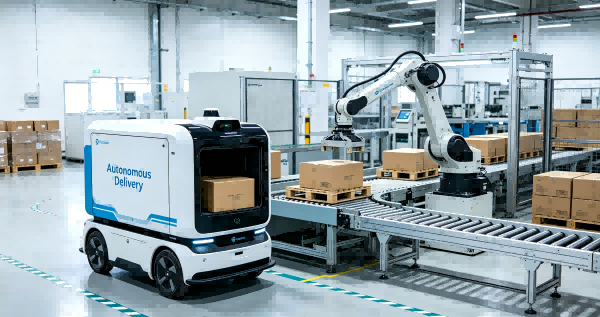
Combining autonomous delivery with packaging factories brings clear advantages:
- Lower Costs: Less need for human drivers and fewer warehouse stops can cut expenses significantly. Autonomous systems reduce labor and fuel costs while running almost non-stop.
- Faster Delivery: Packages can leave the factory and reach customers much quicker. 24/7 operation means no waiting for the next shift or driver break. Some systems aim for same-day or even hourly delivery in local areas.
- Better Efficiency: AI optimizes routes and loading, so vehicles carry more with less wasted space. Factories hold less inventory because goods move faster.
- Improved Sustainability: Electric autonomous vehicles produce fewer emissions. Smarter packaging reduces waste, and optimized routes use less energy. This helps companies meet environmental goals.
- Higher Reliability and Safety: Machines make fewer mistakes than humans in repetitive tasks. Real-time tracking gives customers peace of mind, and safety features in autonomous systems can reduce accidents.
- Scalability: During busy times like holidays, the system can handle more orders without hiring temporary staff.
Businesses also enjoy better customer satisfaction thanks to accurate delivery windows and fewer damaged packages.
Autonomous delivery is not a distant dream. It is already happening in pilot projects and growing fast. The market for these technologies is expanding rapidly as more companies see the benefits.
Packaging factories that adopt this integration will stay competitive. They can offer faster service, lower prices, and greener operations. For business owners and managers, now is a good time to explore small tests — perhaps starting with local deliveries or internal factory robots.
The result is a smoother, smarter supply chain: products move from packaging line to customer door with minimal human touch. This saves money, protects the environment, and delights customers.
The logistics revolution has begun. Factories that embrace autonomous delivery today will lead the way tomorrow.
Copyright © 2022 Adewo Automation Equipment Co.,ltd. All rights Reserved.
Links Sitemap RSS XML Privacy Policy