
Copyright © 2022 Adewo Automation Equipment Co.,ltd. All rights Reserved.
Links Sitemap RSS XML Privacy Policy

Choosing the right Auto Cutting Machine is no longer just about replacing one manual step with one powered step. For many die-making businesses, the real challenge is much bigger: inconsistent cutting quality, operator fatigue, wasted steel rule, slower order turnaround, and the constant risk of errors when multiple processing steps are handled separately. In this article, I explain what buyers should really look for, where production bottlenecks usually appear, and how integrated cutting and creasing equipment can improve consistency, speed, and workshop efficiency. I also show how a reliable manufacturer such as Adewo Automation Equipment Co.,ltd. fits into that conversation by serving practical industrial needs rather than selling vague promises.
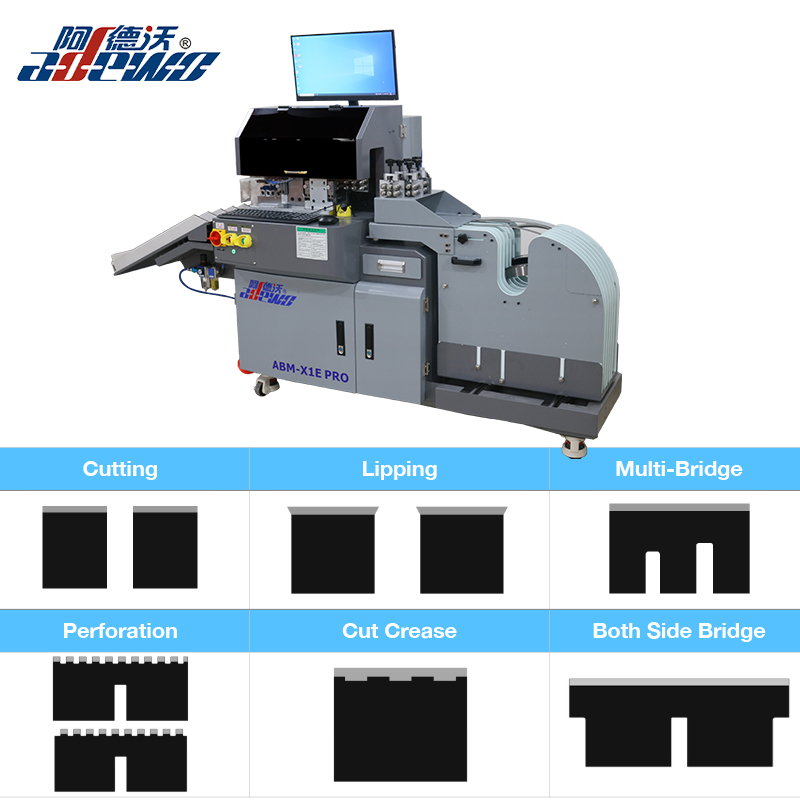
When people first search for an Auto Cutting Machine, they often think in very simple terms: “I want faster cutting.” But speed alone is rarely the true pain point. In real production environments, the larger problem is that manual or semi-manual rule processing creates a chain of small losses that stack up all day long.
I often see the same frustrations repeated across workshops. Operators spend too much time measuring, switching tools, correcting cut lengths, reworking damaged rule, or pausing production because one finishing step falls behind another. That means a workshop may not be losing only minutes. It may be losing schedule stability, labor confidence, and margin on every batch.
The most common customer pain points usually include:
This is exactly why buyers begin looking for more integrated equipment. They do not just want mechanization. They want workflow relief.
A well-designed Auto Cutting Machine changes the workshop in a very practical way: it reduces the number of manual touchpoints between one processing action and the next. Instead of treating notching, perforation, cut crease preparation, lipping, and cutting as fragmented operations, the machine helps combine them into a more continuous workflow.
That matters because every extra manual handoff introduces risk. A slight measuring error, an inconsistent feeding angle, or a delayed finishing step can affect the next stage. In die making, precision is not an abstract ideal. It directly influences board quality, downstream fitting, production timing, and customer satisfaction.
In other words, an Auto Cutting Machine is valuable not because it looks modern, but because it makes repeatable work easier. It helps teams move from “operator-dependent output” toward “process-dependent output.” That shift is what allows a workshop to grow without letting quality become unpredictable.
| Production Concern | Manual or Fragmented Workflow | Integrated Auto Cutting Workflow |
|---|---|---|
| Processing continuity | Multiple separate handling stages | More connected operation with fewer interruptions |
| Operator burden | High attention and repetitive handwork required | Reduced manual involvement in repeatable steps |
| Consistency | Varies depending on individual skill and fatigue | More stable results across repeated runs |
| Lead time pressure | Harder to manage urgent or multi-order schedules | Better support for quicker turnaround planning |
| Material efficiency | Higher risk of trial-and-error waste | Lower waste through more controlled processing |
Not every machine with an automated label is equally useful. Buyers should look past brochure language and focus on features that solve daily production problems. I always recommend evaluating the machine by asking one question: “Will this feature reduce friction in actual work?”
Here are the areas I would examine closely before making a decision:
This is where a supplier’s background starts to matter. Buyers do not only purchase a machine. They purchase the response speed, technical clarity, and post-sale reliability behind that machine. A manufacturer such as Adewo Automation Equipment Co.,ltd., which focuses on die-making and packaging-related machinery, becomes more relevant when buyers need a supplier that understands the full working context instead of treating the machine as a generic export item.
The best purchase is rarely the cheapest one on paper. It is the one that prevents lost production hours later.
Buyers often ask whether they should continue with skilled manual teams or move toward automation. My answer is usually this: if your order pattern is becoming more frequent, more customized, or more time-sensitive, manual processing alone will eventually start limiting growth.
That does not mean manual expertise loses value. It means expert labor should be used where judgment matters most, not wasted on repetitive actions that a capable Auto Cutting Machine can standardize.
| Decision Factor | Mostly Manual Approach | Auto Cutting Machine Approach |
|---|---|---|
| Labor structure | Relies heavily on experienced operators | Lets teams reassign labor to higher-value tasks |
| Scalability | Growth depends on adding people carefully | Growth becomes easier through process repeatability |
| Error exposure | Higher chance of inconsistency during long shifts | Lower dependence on manual repetition |
| Order flexibility | Urgent jobs can disrupt the whole line | Better suited to controlled fast-turn production |
| Long-term cost control | Can look cheaper at first but hide losses | Can improve cost performance over sustained output |
For businesses handling packaging dies, cutting dies, creasing operations, and related board-processing work, the move toward automation is usually less about technology fashion and more about operational discipline.
An Auto Cutting Machine is especially valuable for businesses that cannot afford repeated manual correction. In my view, the strongest fit usually includes:
Smaller businesses can benefit too, especially if they face one of two common pressures: unstable labor availability or rising expectations from customers who now want shorter delivery times with no drop in accuracy. In that situation, automation is not excessive. It is protective.
It protects workflow consistency. It protects delivery promises. And, frankly, it protects reputation.
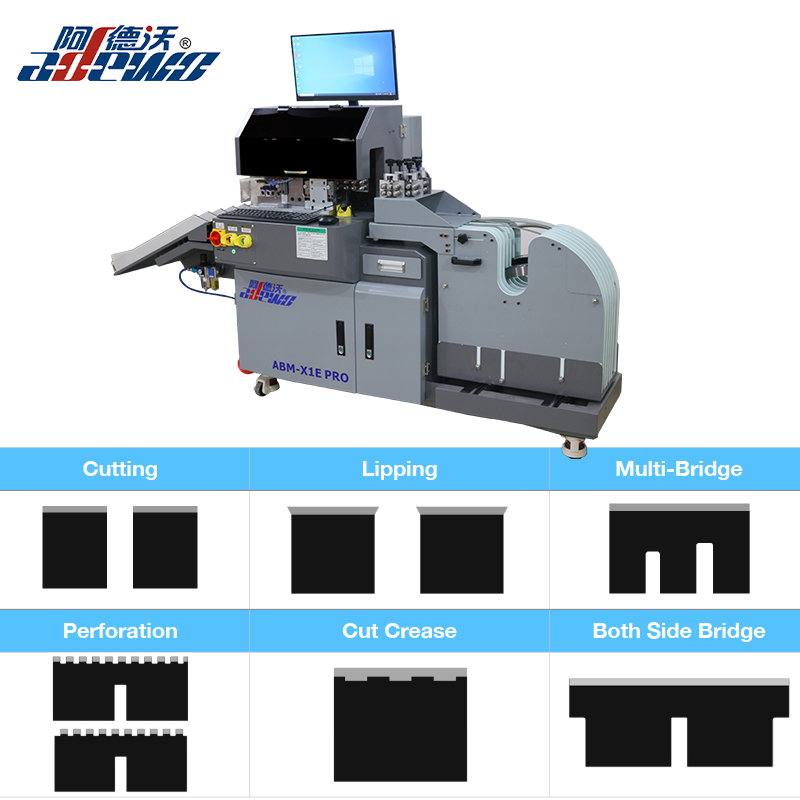
Before choosing your next Auto Cutting Machine, I suggest using a simple decision framework. It helps cut through marketing noise and focus on long-term fit.
A good supplier should be able to discuss your workflow in detail, not just quote a model number. That is why many buyers prefer working with manufacturers focused on packaging and die-making machinery rather than broad catalogs with minimal technical depth. The more clearly a supplier understands your process, the easier it becomes to choose the right configuration with confidence.
If you are comparing options right now, this is the moment to be demanding. Ask sharper questions. A serious supplier will welcome them.
Is an Auto Cutting Machine only suitable for large factories?
No. It is often a smart choice for small and medium workshops that want to reduce repetitive manual work, improve consistency, and manage customized orders with less pressure.
What is the biggest practical advantage of an Auto Cutting Machine?
The biggest advantage is process integration. When one machine can reduce separate handling steps, production becomes easier to control and less dependent on manual correction.
How should I compare one supplier with another?
Compare them on application fit, technical clarity, training support, response speed, and after-sales reliability. A machine is only as useful as the support behind it.
Can this type of machine help reduce material waste?
Yes. More controlled processing usually means fewer adjustment mistakes, fewer repeated cuts, and less waste caused by manual inconsistency.
What should I ask before requesting a quotation?
Prepare details about your steel rule sizes, daily or weekly volume, product applications, current bottlenecks, and expected delivery pace. The clearer your production picture is, the better the recommendation will be.
If your workshop is losing time to manual correction, repeated handling, or unstable rule processing, now is the right time to rethink the workflow. A well-matched Auto Cutting Machine can help you reduce labor pressure, improve consistency, and build a more dependable production rhythm. If you want to explore a practical solution from Adewo Automation Equipment Co.,ltd., review your application needs, compare the right machine options, and contact us today for a conversation focused on your actual production goals.
Copyright © 2022 Adewo Automation Equipment Co.,ltd. All rights Reserved.
Links Sitemap RSS XML Privacy Policy