
Copyright © 2022 Adewo Automation Equipment Co.,ltd. All rights Reserved.
Links Sitemap RSS XML Privacy Policy

In the vast tapestry of Chinese culture, there are two ancient art forms that transform simple materials into storytelling magic. One uses paper and scissors to create intricate worlds on a flat surface; the other brings leather figures to life behind a illuminated screen. These are the arts of Chinese paper cutting (剪纸, jiǎnzhǐ) and shadow puppetry (皮影戏, píyǐngxì) .
Recognized by UNESCO as part of humanity's intangible cultural heritage , these crafts are more than just decorations or performances. They are windows into the soul of China, preserving the wisdom, humor, and dreams of ordinary people. Let’s step into this world where light and shadow meet.
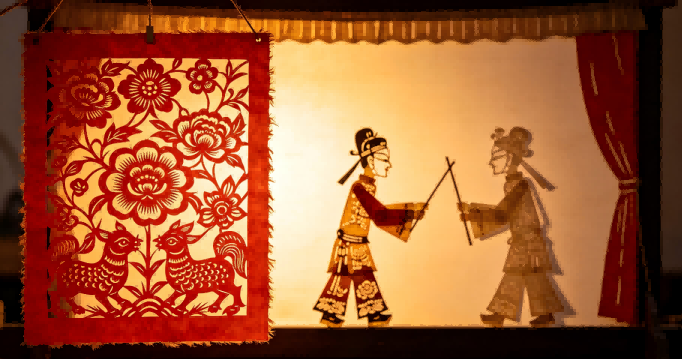
Chinese paper cutting has a history of at least 1,500 years. The earliest surviving paper cuts, found in Xinjiang, date back to the Northern Dynasties (386-581 AD) . But the craft itself is even older; before paper was invented, people created similar镂空 (lōukōng, hollowed-out) patterns on gold foil and leather .
Walk through any traditional Chinese neighborhood, and you’ll see these red artworks stuck on windows (hence the name "window flowers"), doors, and walls. They appear during festivals, weddings, and birthdays, each pattern carrying a specific wish.
Chinese剪纸 is incredibly diverse. Generally speaking, northern styles are bold and simple, while southern styles are delicate and exquisite . Here are a few masters of the craft:
The Dazzling Colors of Yuxian (蔚县剪纸) : From Hebei Province, this style is unique because it uses a carving knife instead of scissors and is dyed with vivid colors. The result is bright, saturated art that looks like a painting but has the texture of a cut .
The Ancient Spirit of Yiwulüshan (医巫闾山满族剪纸) : Originating from the Manchu ethnic group, this style retains a primitive and mysterious charm. It often depicts shamans, gods, and nature spirits, with a rough, powerful aesthetic that feels like it comes from an ancient ritual .
The Fineness of Yueqing (乐清细纹刻纸) : Hailing from Zhejiang province, this style is famous for being unbelievably intricate. Artisans can carve as many as 52 lines into a one-inch square piece of paper . Imagine the patience and skill required!
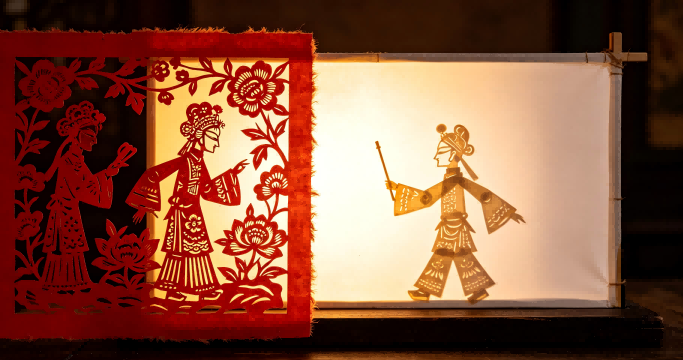
Long before movies and television, there was shadow puppetry. French film critic Georges Sadoul even called it the "ancestor of the cinema" .
Legend says it began with a heartbroken emperor. During the Han Dynasty (over 2,000 years ago), Emperor Wu missed his dead concubine so much that a minister created her silhouette using leather and cloth. When lit by a candle, her shadow "came back to life," comforting the emperor .
By the Song Dynasty (960-1279), shadow puppetry was the hottest ticket in town. It was performed in busy marketplaces called "washe," much like modern theaters .
Making a shadow puppet is a complex process. Using cow or donkey leather, artisans go through 24 steps—including scraping, carving, and coloring— to create a single puppet . The carving techniques are divided into "yin" (negative) and "yang" (positive) cuts .
The puppets are then controlled by three bamboo sticks. Behind a white cloth screen, with an oil lamp casting light, a single artist can make a warrior gallop across a battlefield, a lady blush, or a demon fly through the air.
Just like paper cutting, shadow puppetry has many regional flavors :
Shanxi School (陕西皮影) : Bold and grand, matching the powerful local opera style known as Qinqiang .
Tangshan School (唐山皮影) : Famous for its singing. Performers use high-pitched, piercing voices that can travel far through the countryside .
Hunan School (湖南皮影) : Known for realism and detail. Hunan puppets are often designed to be more lifelike, and the stories, like the award-winning Three Little Mice, are full of lively movement.
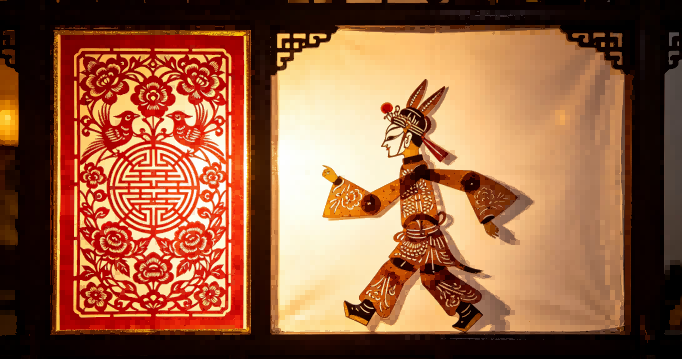
What makes these arts truly special is not just the technique, but the philosophy behind them.
Chinese folk art does not aim for photographic realism. It uses "imagery" (意象, yìxiàng) . An artist might cut a tiger with a second, smaller tiger inside its belly to symbolize maternal love, or combine a fish and a human to tell a creation myth.
For generations, these skills were passed down from mother to daughter. In rural China, a girl's skill with scissors was a mark of her virtue and intelligence . Similarly, a shadow puppeteer must be a "one-man band," mastering not only puppet manipulation but also singing, drumming, and even philosophy .
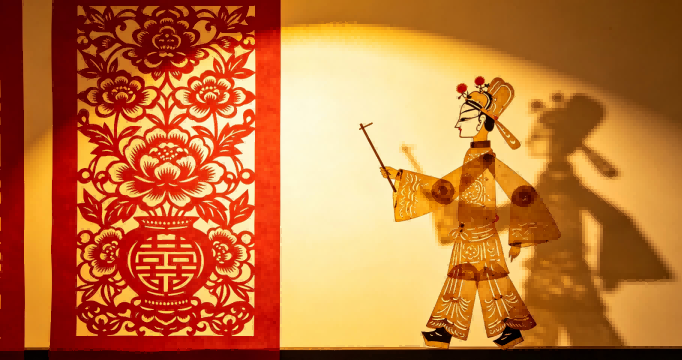
Today, these ancient arts are finding new life. Designers incorporate paper-cutting patterns into fashion and branding. Shadow puppet troupes tour internationally, performing for audiences in Europe and America, with some exports even reaching the British Museum .
They remind us that stories are universal. Whether it's a paper cut of a zodiac animal stuck on a window or a shadow puppet of the Monkey King dancing on a screen, these folk arts continue to tell China's stories—one cut, one shadow, at a time.
So the next time you see a piece of red paper cut into the shape of a "Fu" character, or a shadow dancing behind a screen, stop and look closely. You are not just seeing art; you are hearing the whispers of history and the heartbeat of a culture.
Copyright © 2022 Adewo Automation Equipment Co.,ltd. All rights Reserved.
Links Sitemap RSS XML Privacy Policy