

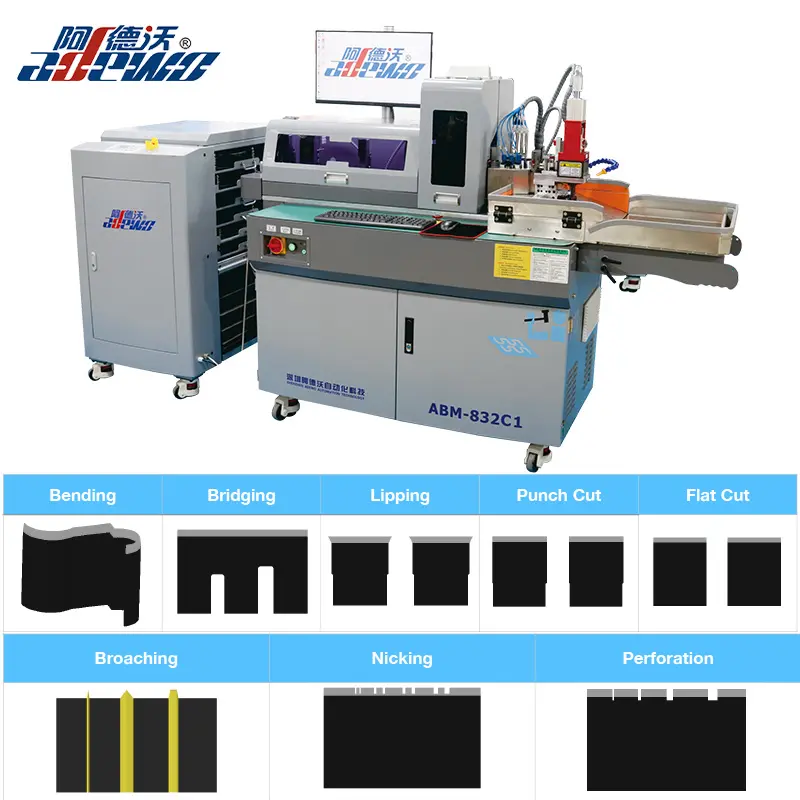

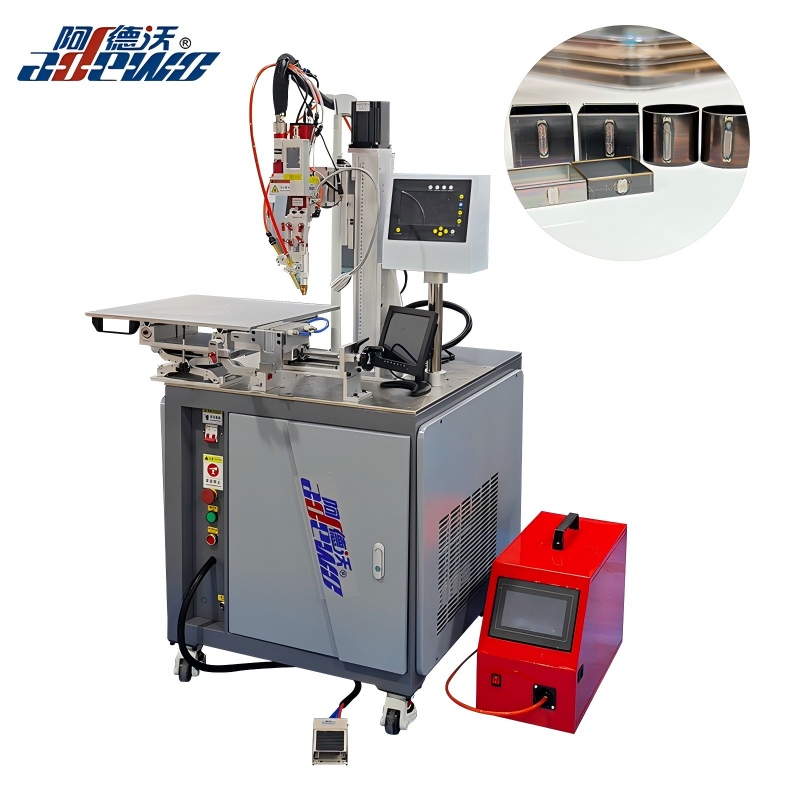

In the packaging printing, paper box, color box, and die-cutting industries, the precision and efficiency of die-cutting directly affect the quality of subsequent die-cutting production. As the market demand for small-batch, multi-specification, and complex structured packaging products continues to increase, the traditional method of relying on manual labor to complete processes such as bending, marking, and cutting is gradually facing problems such as low efficiency, high labor costs, and unstable processing precision.
I. What is ABM-832B1 ?
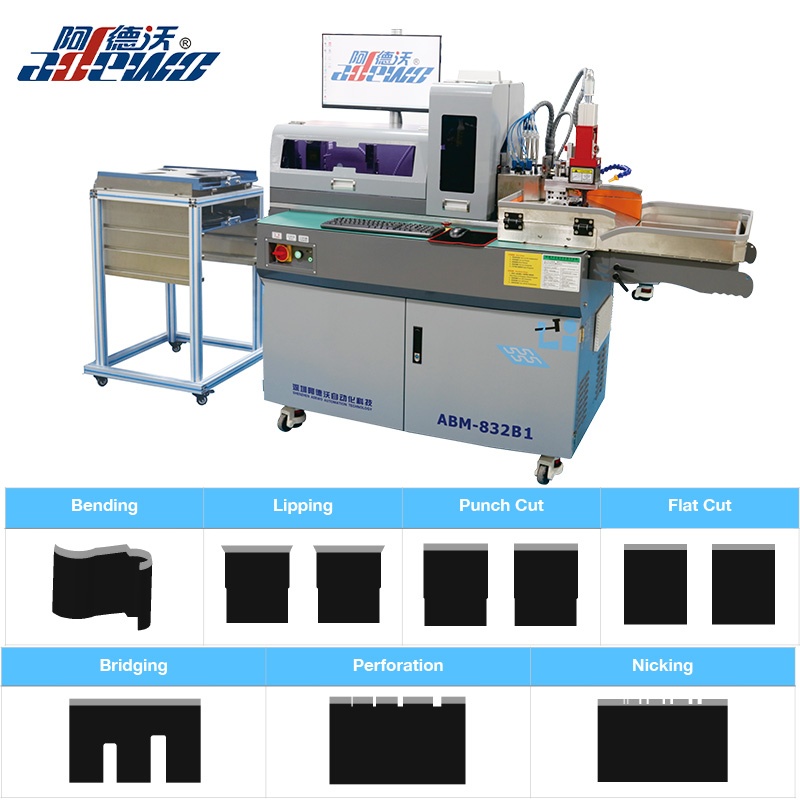
The ABM-832B1 is a multi-functional automatic bending machine developed for the die-cutting industry. It is mainly used for automatically feeding, bending, marking, cutting and related processing of die materials according to design documents.
Compared to traditional manual operation, this equipment can integrate multiple die-cutting processes into one machine, reducing errors caused by repeated manual measurement, positioning, and processing.
The equipment supports blade heights from 8 to 32 mm and can accommodate blades of different thicknesses, such as 0.45 mm, 0.53 mm, 0.71 mm, and 1.05 mm. Processing parameters can be set via software to better meet the processing needs of different die-cutting products.
II. Multifunctional integration: One machine completes multiple processing procedures.
The basic functions of the equipment include:
Bending & Nicking & Lipping & Seamless die-cutting (Mold Cut) & Bridging & Flat Cut & Hole / Perforation (optional)
By using a multi-functional punching die combination, appropriate processing methods can be selected according to different die structures, reducing process changes between different equipment. The integrated design of bending and shearing functions not only improves processing efficiency but also reduces safety risks during manual operation.
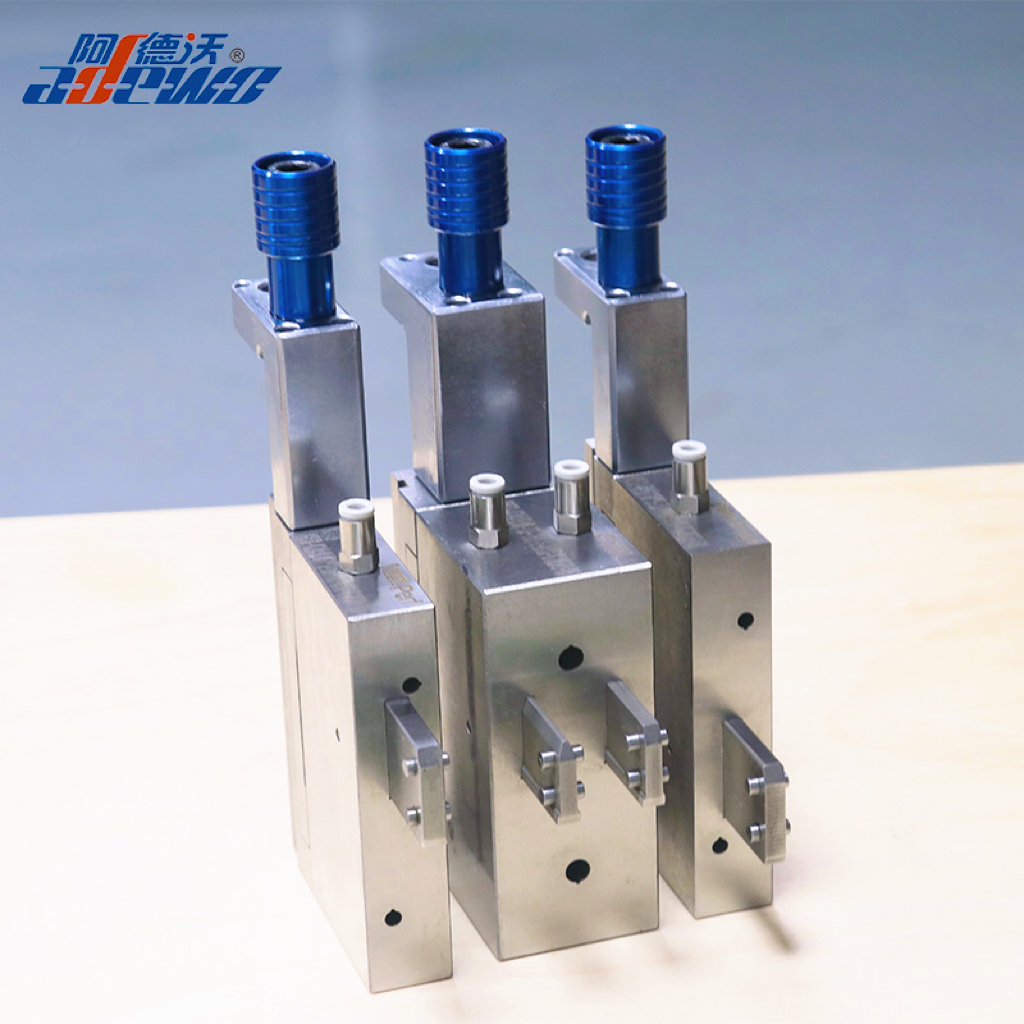
III. High-precision feeding to meet the needs of complex die-cutting machiningFor die-cutting production, feeding accuracy is a crucial factor affecting the final processing quality.
The ABM-832B1 uses an automatic feeding system with a feeding accuracy of ±0.03mm, a minimum bending dimension of 1.5mm at the front, and a minimum bending dimension of 1.0mm at the rear.
Meanwhile, the equipment supports multiple dot sizes, with the smallest dot size reaching 0.2mm. The dot width and depth can be set via software. This means that when dealing with complex lines, intricate structures, and various sizes of die-cutting molds, the processing can be controlled through digital parameters, reducing dimensional deviations caused by manual operation.IV. Direct support for DXF and DWG files simplifies the die-cutting mold making process.Modern die-cutting production is increasingly reliant on digital design.
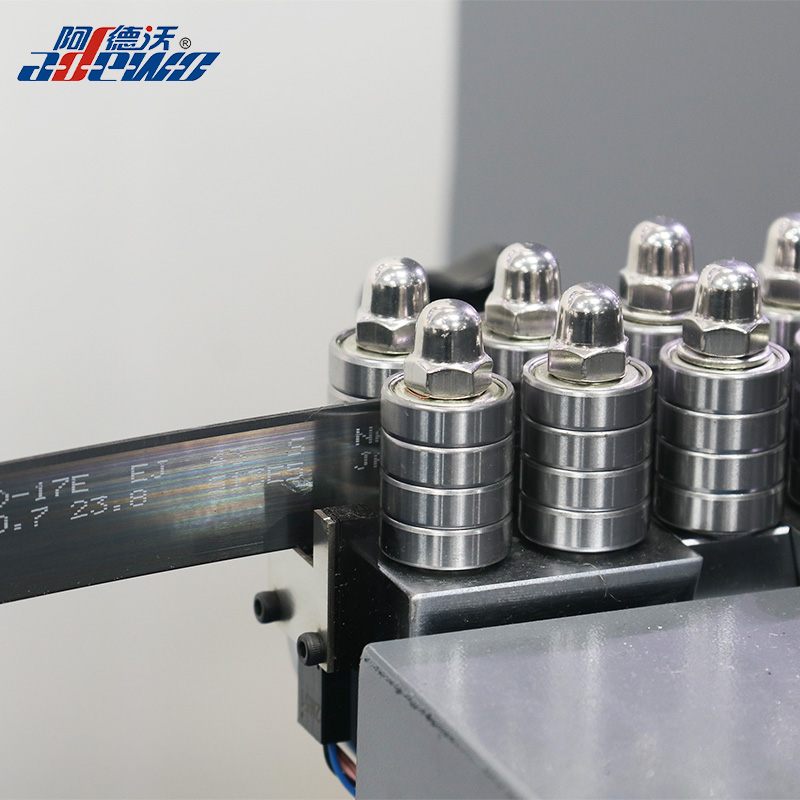
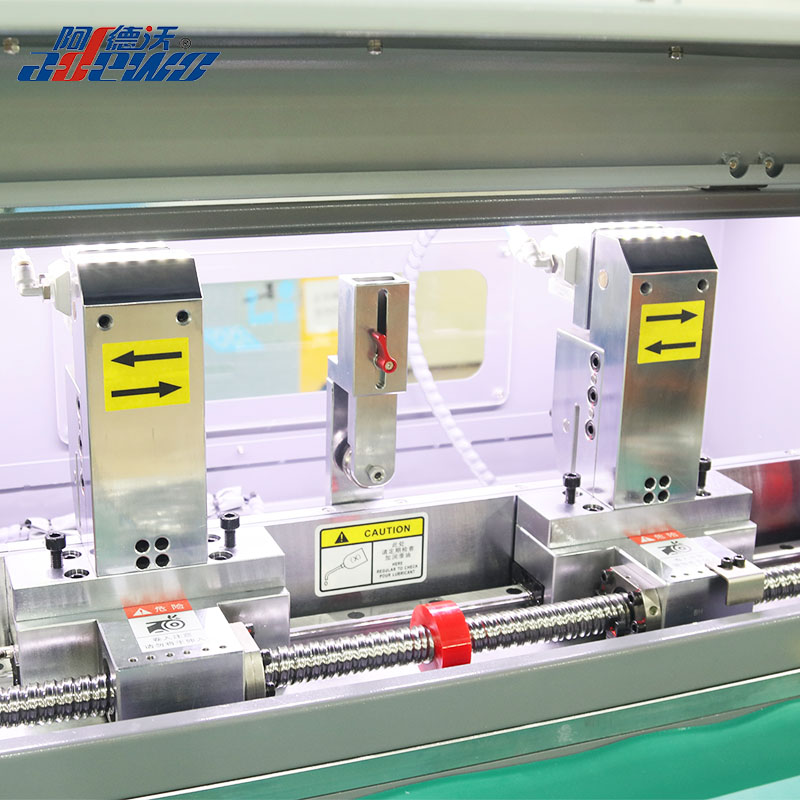
The ABM-832B1 supports DXF and DWG file formats, allowing it to be integrated with common die-cutting design workflows.
The basic workflow can be summarized as follows:
Design files → Import machining data → Software parameter settings → Automatic feeding → Automatic bending/marking/cutting → Complete die-cutting machining
Digital processing methods can reduce repetitive tasks such as traditional manual measurement, marking, and positioning, allowing die-cutting to gradually shift from manual experience-based operations to standardized and automated production.
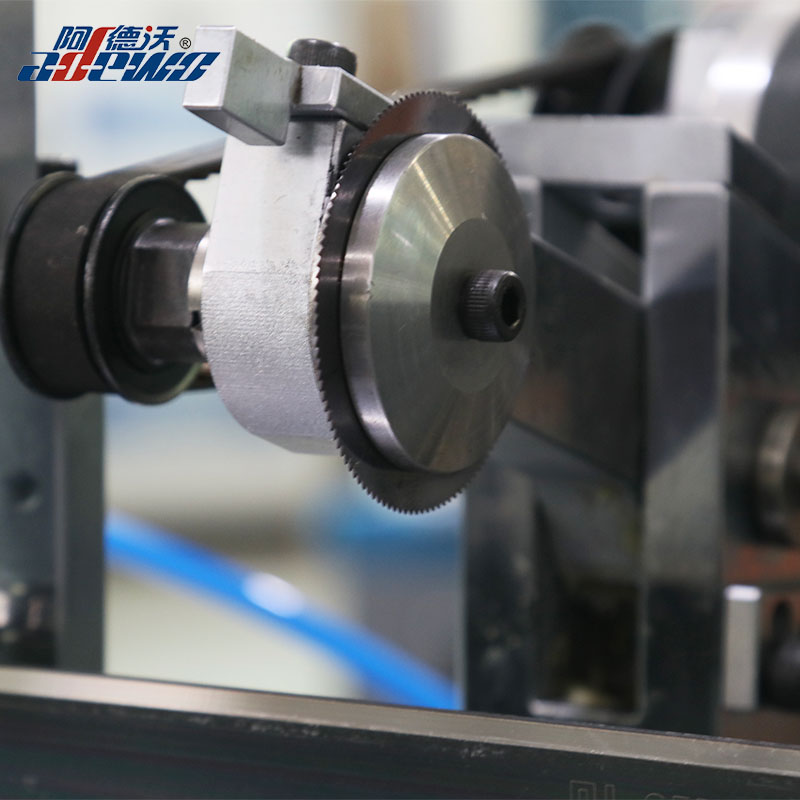
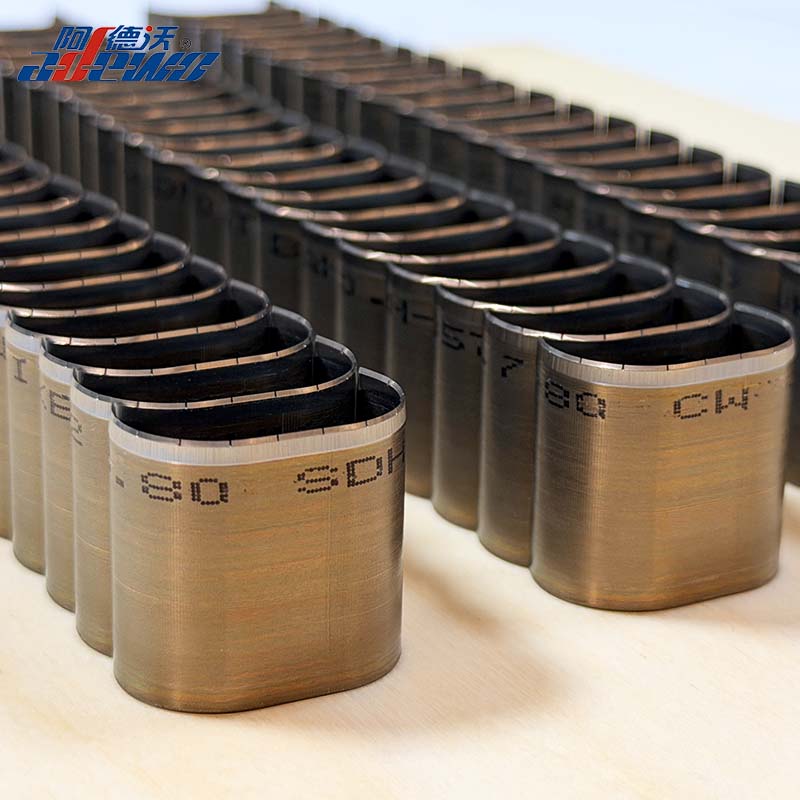
V. Independent mold design makes maintenance and replacement more convenient.
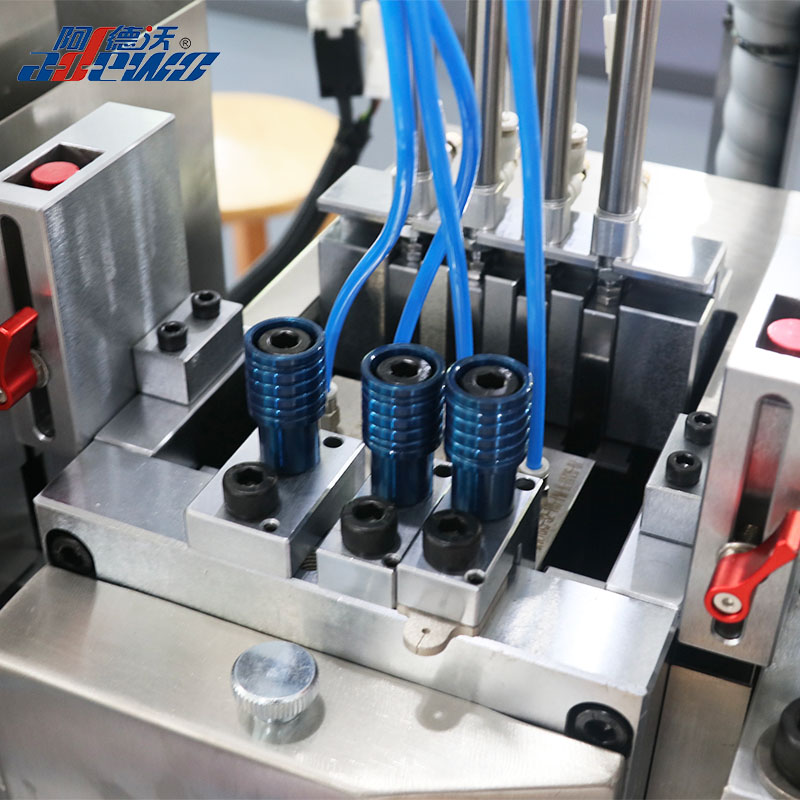
In terms of equipment structure, the ABM-832B1 adopts an independent mold design, and different processing tools can be replaced according to production needs.
Meanwhile, the equipment is equipped with a Panasonic servo motor, and with the dual clamps and screw guide rail continuous feeding structure, it can achieve more stable continuous processing.
For die-cutting manufacturers, the independent tool structure not only facilitates daily maintenance, but also allows for quick adjustment of processing tools according to different product requirements.
VI. Miniaturized design, balancing production efficiency and space utilization
For small and medium-sized die-cutting factories and packaging companies, the floor space occupied by the equipment is also an important factor to consider when purchasing.
The overall dimensions of the ABM-832B1 are approximately:
2600 × 750 × 1600mm (Length × Width × Height)
The machine weighs approximately 480kg and maintains a relatively compact layout while integrating multiple processing functions, which can help companies reduce the space occupied in production.
For companies that need to improve their die-cutting capabilities within limited factory space, this "miniaturized + multifunctional" design has certain practical value.Important parameters:Knife height 8-32
Blade thickness 1, 1.5, 2, 3 pt
The minimum bending radius at the front is 1.5, the minimum bending radius at the rear is 1.0, the feeding accuracy is 0.03, and the bending flatness is ±0.2.
Basic functions: bending, bridging, seamless punching, flat cutting, beak cutting, dotting. Optional accessories: punch teeth and punching.
| Optional Rule Thickness | 0.45,0.53,0.71,1.05mm |
| Supported Rule Height | 8-32mm |
| Front Min. Bending Size | 1.5mm |
| Back Min. Bending Size | 1.0mm |
| Feeding Precision | ±0.03mm |
| Bending Flatness | 0.2mm |
| Basic Functions | Bending,Nicking,Mold Cut,Lipping,Bridging,Flat Cut |
| Optional Functions | Perforation,Hole |
VII. Automated die-cutting equipment is becoming an important direction for efficiency upgrading in the industry.
As the packaging industry moves towards personalization, small batches, variety, and rapid delivery, the traditional production model that relies on manual die-cutting is facing increasing efficiency pressures.
The value of automatic bending equipment is not just "replacing manual labor," but more importantly, making the die-making process more stable and controllable through digital files, automatic feeding, and standardized processing parameters.
The ABM-832B1 integrates multiple functions such as bending, nicking, cutting,bridging, and presser foot, along with a ±0.03mm feeding accuracy and support for DXF and DWG files, providing die-cutting manufacturers with a more compact and efficient automated processing solution.
For companies looking to reduce reliance on manual labor, improve die-making efficiency, and further advance production automation, this type of multi-functional automatic bending equipment will become an important option for enhancing production capacity.
Recommended News:
What Is Nicking in Die Making?
The End of Experience-Driven Die Making? How Intelligent Auto Bender Is Changing the Industry?
How to Choose the Right Automatic Rule Bending Machine for Die Making?