



The packaging industry is experiencing not only steady growth but also a profound shift in order composition. While e‑commerce, logistics, food packaging and consumer goods continue to drive overall demand, the nature of orders has become increasingly fragmented. Customized structures, shorter production runs and tighter delivery schedules are now common across many packaging segments from corrugated boxes to displays, folding cartons and specialty packaging.
These changes place new demands on the die‑making industry. For die manufacturers, the challenge is no longer simply producing a cutting die. Consistent rule bending, accurate forming, efficient processing, and the ability to handle different die structures are becoming increasingly important. Notably, the equipment used must be versatile enough to accommodate a wide range of steel rule sizes, bending patterns and secondary operations – not just for high‑volume corrugated box production, but for the diverse die types that workshops encounter daily. The solutions discussed here are designed with compatibility and flexibility in mind, enabling manufacturers to respond quickly to varied order requirements without being tied to a single application.
Corrugated Dies Require Consistent Rule Bending
Corrugated box dies typically use relatively high steel rules and can involve larger die boards and more complicated structures than many conventional folding carton applications.
Small variations in bending angle or position can affect how the finished die performs during cutting and creasing. Issues such as uneven bending, inaccurate joints or distorted rules may contribute to inconsistent cutting, creasing problems and additional adjustment during die assembly.
This is one reason why automatic rule bending technology is attracting more attention from modern die-making workshops.
Instead of relying entirely on manual bending, an automatic bender can use digital drawing data and controlled feeding and bending processes to improve repeatability from one die to another.
One Machine Can Combine Multiple Die-Making Processes
The development of automatic bending equipment is also moving beyond simple rule forming.
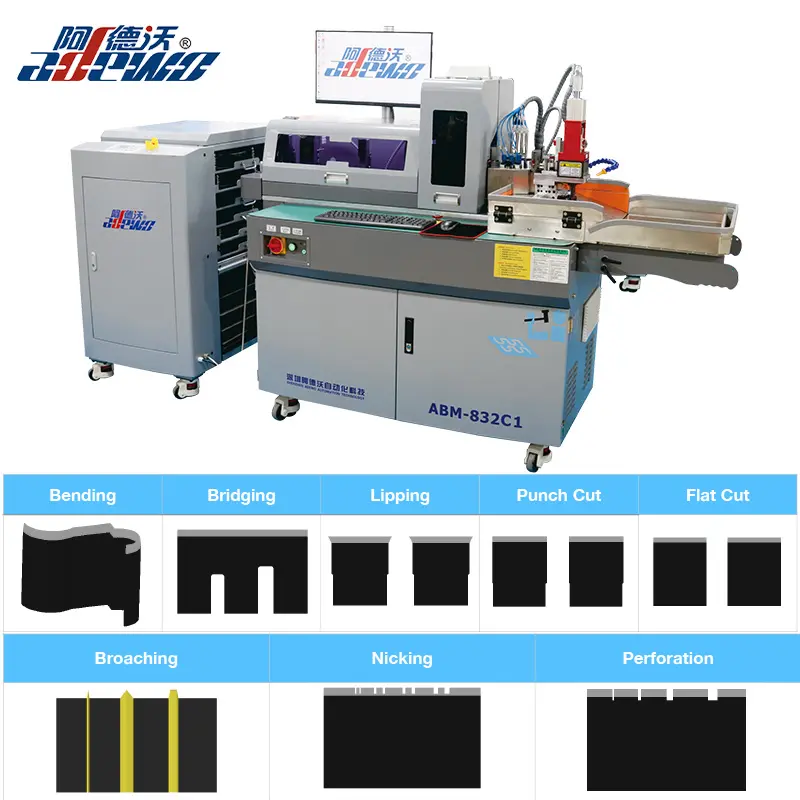
For example,the ABM-860C2Multi-Functions Auto Bender is designed to combine several operations used in die-making within one production system. In addition to rule bending, its basic functions include broaching, nicking, lipping, mold cutting, bridging and flat cutting.
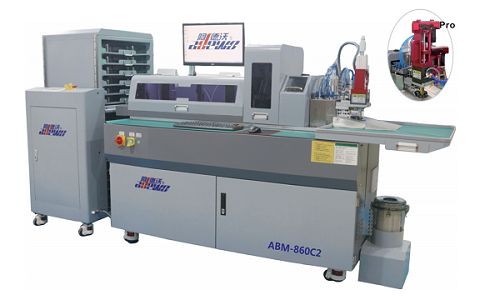
The machine also supports optional operations such as perforation, hole processing, cut crease and bottom nick. This multi-function configuration allows die manufacturers to select different processing functions according to the structure and requirements of individual dies.
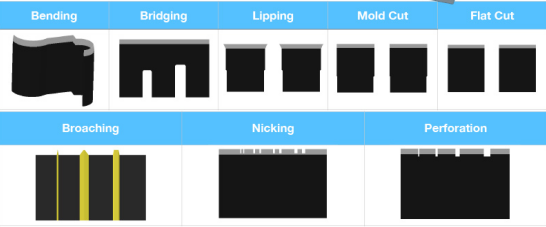
For workshops producing different types of corrugated and packaging dies, having multiple functions available on one machine can reduce the need to move between separate processing equipment.
Feeding Accuracy Matters in Automated Bending
Automation does not only depend on the bending mechanism itself. Accurate and stable rule feeding is equally important, particularly when producing dies with multiple bending positions.
The ABM-860C2 uses a dual-clamp feeding system, while its technical specifications list a feeding precision of ±0.03 mm and bending flatness of 0.2 mm. The supported rule height is approximately 23.8–60 mm, with the machine designed for several common rule thicknesses.
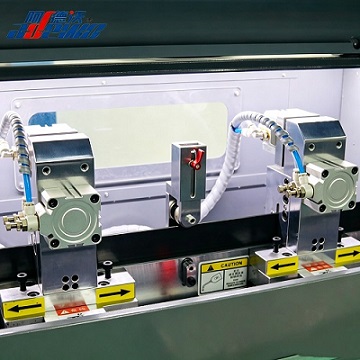
These specifications are particularly relevant when die manufacturers need to reproduce complex bending patterns from digital files.
The system supports DXF and DWG file formats, allowing digital die drawings to be used as part of the automated production workflow.
| Optional Rule Thickness | 0.71,1.05,1.42mm |
| Supported Rule Height | 23.8-60mm |
|
Front Min.Bending Size |
1.5mm |
|
Back Min. Bending Size |
1.0mm |
| Feeding Precision | ±0.03mm |
| Bending Flatness | 0.2mm |
Additional Functions for More Complex Die Structures
Corrugated packaging does not always involve simple straight cutting lines. Different box structures may require bridges, nicks, perforations, holes or other special treatments.
This is where multi-function equipment can provide additional flexibility.
The ABM-860C2 includes multi-nicking and broaching functions, with single and double broaching configurations available. Its optional bottom-nick function can also be used for applications where adjustment of the die board’s flatness is required.
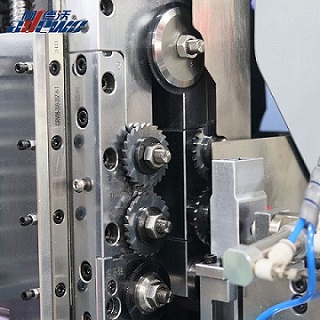
By combining these operations with automatic bending, a die-making workshop can handle more processing steps within the same production setup.
Automation Can Reduce Dependence on Manual Adjustment
Manual bending still has its place, particularly for simple jobs or workshops with low production volumes. However, production becomes more challenging when order quantities increase and designs change frequently.
Experienced operators remain important, but relying entirely on individual skills can make production consistency more difficult to maintain.
Automated bending equipment provides a more standardized approach. Once the appropriate digital data and processing parameters are prepared, the machine can repeat the bending process with less dependence on continuous manual adjustment.
For die manufacturers, the potential benefits include more consistent production, reduced repetitive work and easier handling of frequently changing orders.
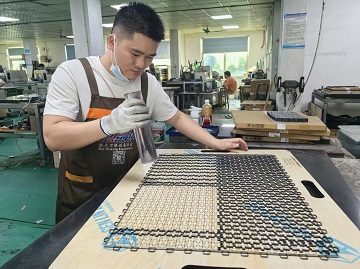
One Machine, Any Die–The New Rule in Die-Making
As packaging formats continue to evolve – from standard shipping boxes to creative display structures and customized cartons – die‑making workshops must handle an ever‑wider variety of die geometries, rule heights and finishing requirements. Delivery deadlines are tightening, and batch sizes are shrinking. In this environment, the ability to maintain precision and consistency across different job types is becoming just as important as overall throughput.
Automatic rule bending machines with multiple processing functions offer a practical response to this challenge. Equipment such as the ABM‑860C2 demonstrates how bending, cutting, nicking and other die‑making operations can be integrated into a single production system, reducing the need for multiple setups and intermediate handling.
As digital design and automated manufacturing become more common across the packaging industry, the die‑making process will continue moving toward greater automation and standardization. Yet the real value lies not in automation for its own sake, but in its capacity to give workshops the flexibility to accept virtually any order – whether it is a high‑volume corrugated run or a one‑off custom prototype.
For die manufacturers today, the key question is no longer simply whether to automate, but how to choose an automation approach that maximizes flexibility, reduces changeover time, and maintains consistent quality across the broadest possible range of applications – ensuring that the workshop stays responsive to whatever the next order brings.
Recommended News:
1.What Boxes Can You Make with the ABM-832C1 Auto Bender?
2.How to Choose the Right Automatic Rule Bending Machine for Die Making?