
Copyright © 2022 Adewo Automation Equipment Co.,ltd. All rights Reserved.
Links Sitemap RSS XML Privacy Policy

For many die makers, the real problem is not whether bending steel rule is possible, but whether it can be done fast enough, accurately enough, and consistently enough to support daily production without exhausting skilled labor. An Auto Bender Machine addresses that pressure by combining multiple steps into one connected process, reducing manual handling, shortening lead times, and improving repeatability across jobs.
In this article, we look at the most common production pain points, explain what makes an Auto Bender Machine valuable in practical workshop use, and show how buyers can evaluate machine capability beyond surface-level specifications. We also introduce how Adewo Automation Equipment Co.,ltd. supports customers who want higher output, cleaner rule forming, and a smoother path from drawing to finished die components.
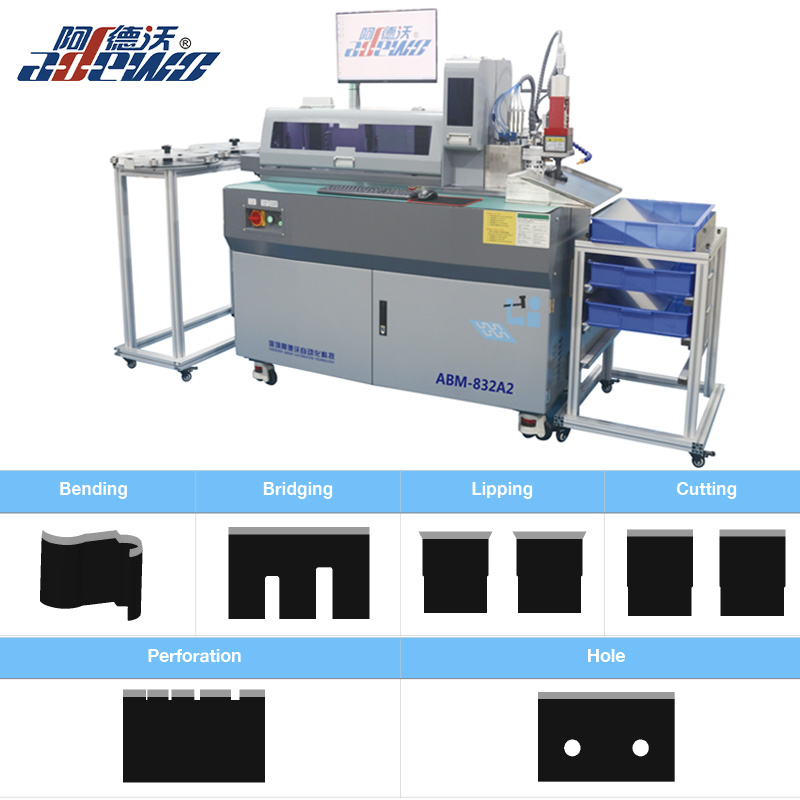
Every workshop wants faster output, but speed alone is never the full story. The real pressure usually comes from unstable quality, too much dependence on operator skill, rushed turnaround expectations, and the hidden cost of repeated adjustment. In many factories, manual bending or semi-manual processing still creates delays that are hard to measure until urgent orders begin to pile up.
A typical pain point starts with inconsistency. Even experienced operators can produce slight variations when a job includes multiple curves, bridges, perforations, lips, or special cuts. Those small deviations may seem manageable at first, yet over time they affect assembly fit, board installation, and the overall finish of the die. When orders become more varied, the burden grows even heavier.
Another challenge is labor dependency. Skilled workers remain valuable, but relying only on manual know-how makes scale difficult. If one operator is absent, overloaded, or handling several urgent jobs at once, the production rhythm breaks. For growing manufacturers, that kind of bottleneck can hold back both delivery performance and customer confidence.
Then there is material efficiency. Rework, mis-bending, and repeated test pieces all consume steel rule and operator time. If the process is fragmented across too many separate steps, it becomes harder to keep the line clean and predictable. Many buyers start searching for an Auto Bender Machine not because they want a fashionable upgrade, but because they want fewer avoidable losses and a steadier production standard.
The biggest advantage of an Auto Bender Machine is not just automation for its own sake. Its real value is the ability to connect several rule-processing actions into one controlled sequence. Instead of handling bending, cutting, bridge work, perforation, lip forming, and related operations in a scattered manner, the machine brings those tasks into a more unified process.
That has immediate benefits for production teams. First, repeatability improves. Once the job data is prepared and the machine settings are matched to the material, the output becomes much more stable from one piece to the next. Second, lead time becomes easier to predict. Shops no longer have to estimate completion based only on operator fatigue or manual adjustment time. Third, the training barrier drops. New staff still need guidance, but they do not have to master every manual technique before contributing to production.
For buyers dealing with short runs, custom jobs, or changing specifications, this matters a great deal. The more diverse the order mix, the more useful a reliable Auto Bender Machine becomes. It gives manufacturers the ability to switch between jobs with less friction while keeping finished rule shapes cleaner and more consistent.
That is also why many professional buyers pay attention to equipment suppliers with focused manufacturing experience. Adewo Automation Equipment Co.,ltd. is one of the names buyers encounter when they are looking for die-making equipment that can support bending, cutting, and related forming operations with practical factory-oriented design.
| Production Factor | Manual or Traditional Method | Auto Bender Machine Method |
|---|---|---|
| Processing speed | Depends heavily on operator experience and job complexity | More stable cycle rhythm with fewer interruptions between operations |
| Repeatability | Can vary from piece to piece during long or complicated runs | Improved consistency when settings and material are properly matched |
| Labor pressure | High dependence on skilled manual handling | Reduces strain from repetitive forming tasks |
| Complex rule shaping | Takes more time and adjustment | Handles combined actions more smoothly in one workflow |
| Production planning | Less predictable for urgent or varied jobs | Easier to estimate output and schedule delivery |
| Waste and rework risk | Higher when multiple hand adjustments are needed | Often lower due to more controlled forming steps |
One common mistake is buying on headline specifications alone. A machine may look impressive in a catalog, but real value comes from fit. Buyers should match the machine to their own order structure, steel rule range, production targets, and operator workflow. The right question is not “What is the most advanced machine available?” but “What machine solves my actual bottlenecks?”
Here are the practical areas worth reviewing before a purchase decision:
A reliable supplier should be willing to discuss actual job conditions rather than pushing a one-size-fits-all pitch. That is often where the difference between a useful investment and an expensive inconvenience becomes obvious.
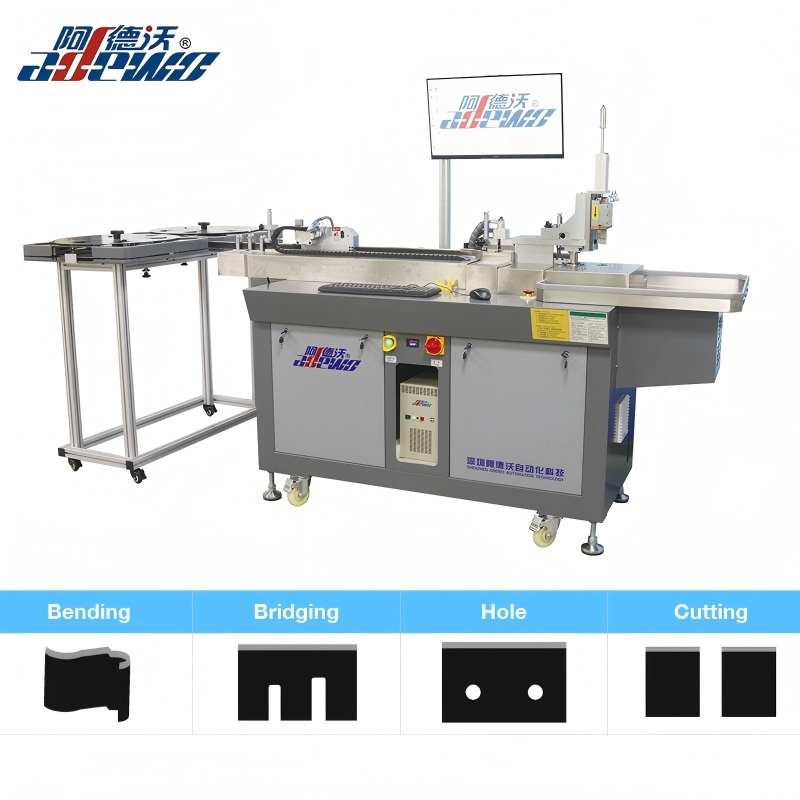
An Auto Bender Machine is especially valuable where product variation is high and dimensional accuracy matters from job to job. Packaging die making is the most obvious example, but it is not the only one. Label rule processing, leather cutting dies, gasket seal applications, and custom industrial die shapes all benefit when rule forming becomes more accurate and repeatable.
In packaging work, fast order changes and tight delivery windows make automation highly attractive. In label and fine-rule applications, precision matters even more because small deviations are easier to notice and harder to fix later. In leather, gasket, or custom cutting industries, buyers often need flexibility across multiple material demands, which makes multi-function equipment even more useful.
That broader range of use cases is why many workshops no longer view an Auto Bender Machine as a narrow single-purpose purchase. Instead, they see it as a productivity platform that supports future job variety while reducing dependency on slow manual correction.
Buyers often focus on the machine itself, but the bigger win usually comes from workflow improvement. When processing steps are better connected, the entire production chain becomes calmer. Operators waste less time moving materials between stations. Supervisors can estimate deadlines more confidently. Quality checks become more consistent because the inputs are more consistent.
This matters for customer-facing performance. Faster quoting, cleaner trial production, and more predictable completion all create a better experience for downstream clients. Even when the finished die looks simple, the buyer notices whether the supplier is dependable. That reputation is built on consistency more than dramatic promises.
A well-matched Auto Bender Machine supports that consistency by removing unnecessary friction from repetitive forming work. It helps workshops spend more attention on accuracy, job management, and customer deadlines instead of chasing preventable bending errors.
For companies that want to modernize die-making capacity with practical equipment support, Adewo Automation Equipment Co.,ltd. offers an option worth evaluating. The right machine should not simply add another device to your floor. It should help your team work with more confidence, more control, and less waste.
1. Is an Auto Bender Machine only suitable for large factories?
No. It is useful for both larger producers and smaller workshops, especially when labor efficiency, output consistency, or order diversity are becoming daily challenges. The key is choosing a model that matches your real production scale.
2. Can one Auto Bender Machine handle different job types?
In many cases, yes. That is one of the reasons buyers invest in this equipment. The real question is which functions, rule sizes, and application ranges are supported by the specific model you are considering.
3. Will automation replace skilled workers completely?
Not completely. Skilled workers still matter for setup judgment, inspection, job planning, and production control. What automation does is reduce repetitive manual strain and make performance less dependent on individual hand technique.
4. What is the biggest benefit buyers usually notice first?
Most buyers notice improved consistency and smoother production flow first. After that, they begin to see gains in labor allocation, reduced rework, and more predictable delivery timing.
5. What should I ask a supplier before placing an order?
Ask about supported rule ranges, available functions, software compatibility, operator learning curve, training support, spare parts, service response, and how the machine fits your exact application rather than generic use.
If your workshop is under pressure to deliver cleaner rule forming, shorter lead times, and more stable output, now is the right time to review your equipment strategy. Talk with Adewo Automation Equipment Co.,ltd. about your production requirements, material range, and application goals, and find the Auto Bender Machine that truly fits your workflow. Contact us today to discuss your project and get a solution built around your real manufacturing needs.
Copyright © 2022 Adewo Automation Equipment Co.,ltd. All rights Reserved.
Links Sitemap RSS XML Privacy Policy