

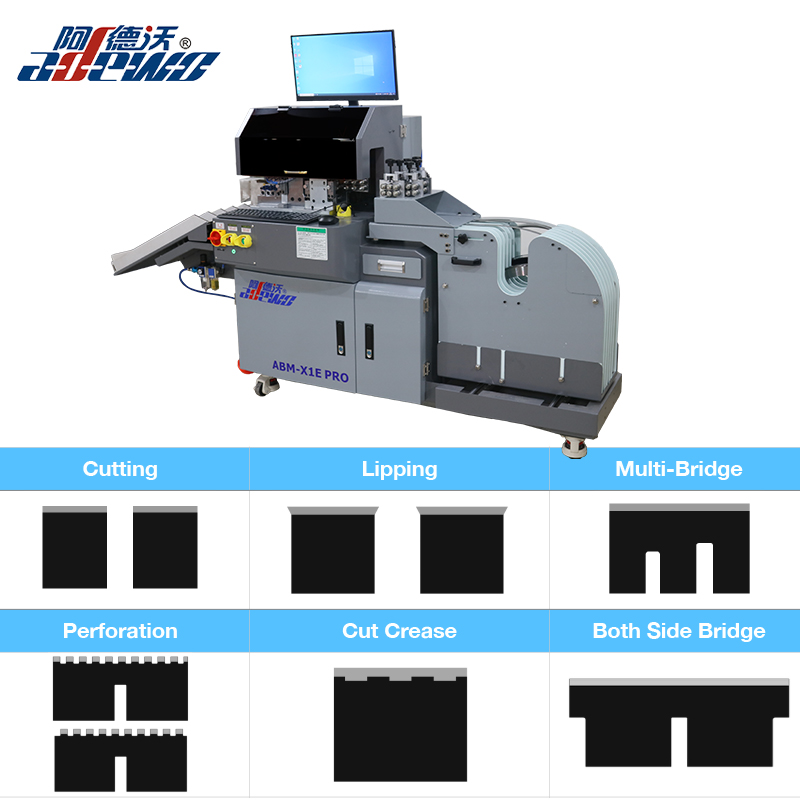
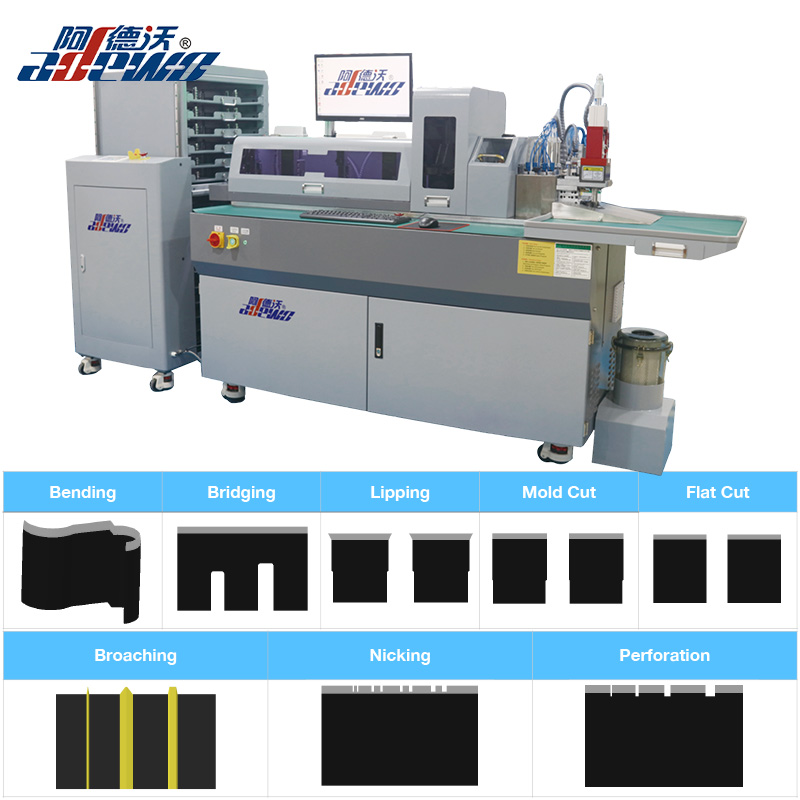
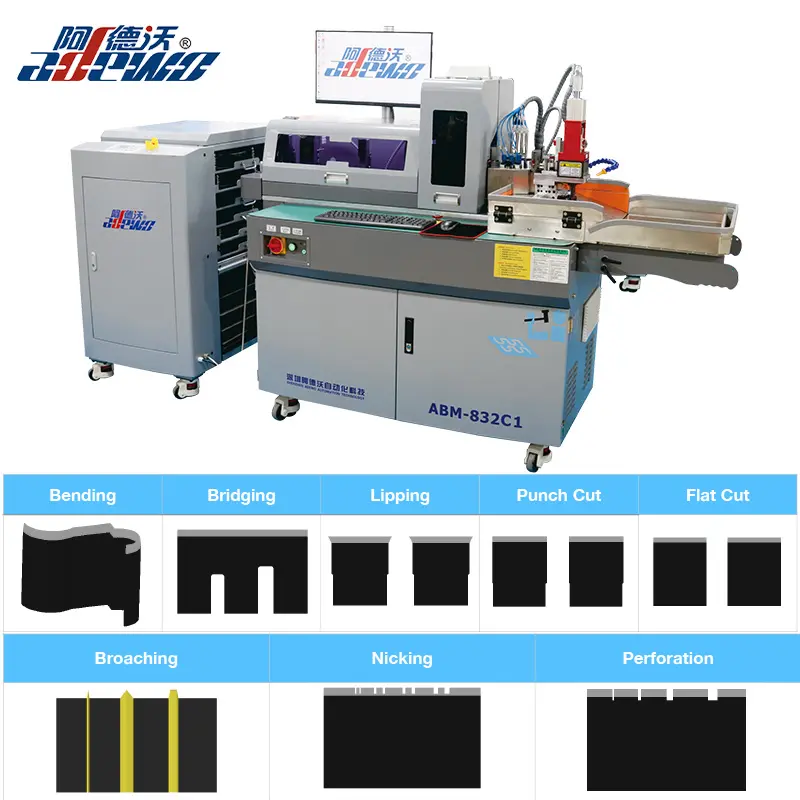

Article Summary: Modern packaging, printing, label, gasket, and die-making workshops are under pressure to deliver cleaner rule lines, shorter lead times, lower rework rates, and more stable production quality. This article explains how The Latest Auto Bender helps address those daily production problems by improving bending consistency, reducing manual dependency, and supporting a more controlled die-making workflow. It also discusses practical selection factors, workshop pain points, machine functions, return considerations, and common buyer questions for companies comparing automatic steel rule bending solutions.
Table of Contents
- Article Outline
- Why Are Workshops Paying More Attention to Automatic Bending?
- What Production Problems Can The Latest Auto Bender Help Solve?
- How Does The Latest Auto Bender Support a Smoother Die-Making Workflow?
- What Should Buyers Compare Before Choosing an Auto Bender?
- Where Can The Latest Auto Bender Be Used?
- How Should a Factory Evaluate the Right Machine Configuration?
- What Should Operators Know About Daily Use and Maintenance?
- FAQ About The Latest Auto Bender
- How Can Buyers Take the Next Step?
Article Outline
- Understanding why manual bending becomes a bottleneck when order volume grows
- Explaining the role of The Latest Auto Bender in die-board production
- Breaking down common pain points such as inconsistent bending, operator fatigue, wasted steel rule, and delayed delivery
- Comparing machine factors such as rule height, rule thickness, bending accuracy, cutting, bridge, lipping, nicking, and perforation functions
- Helping buyers evaluate machine value from production stability rather than price alone
- Answering practical questions from die makers, printing plants, packaging suppliers, and tooling workshops
Why Are Workshops Paying More Attention to Automatic Bending?
In many die-making workshops, the bending stage looks simple from the outside. A steel rule needs to be shaped according to a drawing, placed into a die board, checked, corrected, and delivered. In reality, this stage can decide whether the whole job moves smoothly or becomes a chain of delays. When the bending angle is slightly wrong, when the cutting length is inconsistent, or when an operator has to correct the same curve again and again, the cost is no longer just a few minutes. It affects delivery time, material usage, worker confidence, and customer trust.
This is why more workshops are taking a serious look at The Latest Auto Bender. The goal is not simply to replace hands with a machine. The real goal is to create a repeatable bending process that keeps quality stable even when orders become complicated, urgent, or repetitive. A skilled operator is still valuable, but the machine helps remove the constant pressure of relying only on manual experience.
Adewo Automation Equipment Co.,ltd. focuses on die-making equipment for packaging and printing-related production, and its auto bender solutions are designed around real workshop conditions. Buyers are not only asking whether a machine can bend steel rule. They are asking whether it can keep up with changing order types, reduce waste, simplify operation, and support long-term production planning.
What Production Problems Can The Latest Auto Bender Help Solve?
A workshop usually begins considering an automatic bender after the same problems appear again and again. The team may be working overtime, but delivery is still tight. Operators may be experienced, but results still vary between shifts. Material may not look expensive at first, but repeated scrap quietly eats into profit. These are not dramatic problems; they are daily problems, which is exactly why they matter.
| Workshop Pain Point | Common Result | How The Latest Auto Bender Helps |
|---|---|---|
| Manual bending depends heavily on operator experience | Quality changes from person to person, especially on complex shapes | Automated bending improves repeatability and helps maintain a more consistent rule shape |
| Urgent orders interrupt normal production rhythm | Workers rush, mistakes increase, and rework becomes more frequent | Digital processing and automatic functions support faster job preparation and more controlled output |
| Steel rule waste is difficult to control | Small errors accumulate into visible material loss over time | More accurate bending and cutting reduce unnecessary trial-and-error correction |
| Complex die shapes are hard to reproduce | Repeat jobs may not match previous quality exactly | Machine-assisted processing helps repeat the same bending data more reliably |
| Operator fatigue affects precision | Long shifts lead to slower work and higher error rates | Automation reduces repetitive manual force and allows operators to focus on checking and process control |
For many buyers, the value of The Latest Auto Bender becomes clearest when they calculate the hidden cost of unstable production. A cheaper manual process may appear acceptable when order volume is low. Once the workshop needs faster turnaround, more product categories, and tighter tolerance control, the old method can become expensive in ways that are not immediately obvious.
How Does The Latest Auto Bender Support a Smoother Die-Making Workflow?
A practical auto bender should not only perform one action well. In die making, bending is closely connected with cutting, lipping, bridge processing, nicking, perforation, and other details depending on the die type. If too many steps still need to be handled separately, the production line remains fragmented. That is why machine configuration matters.
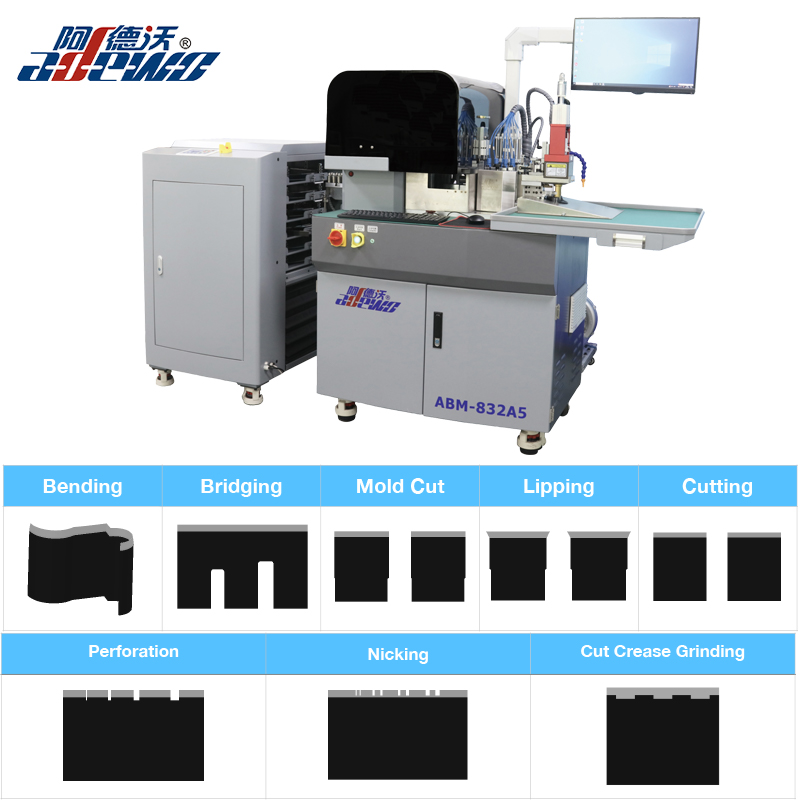
The Latest Auto Bender is built for workshops that want a more integrated process. Depending on the model and configuration selected, functions may include bending, cutting, bridge, lipping, nicking, perforation, grinding, or related die-making operations. This gives factories the flexibility to match the machine to their actual product range rather than forcing one machine into every job.
Key workflow advantages buyers often look for include:
- Cleaner bending paths: Accurate forming helps the steel rule fit the die-board design more smoothly.
- Reduced correction time: Less manual adjustment means operators can move from one job to the next with fewer interruptions.
- Better repeat orders: When customers reorder the same packaging or label die, stored or repeated data can help keep production stable.
- Improved workshop organization: Automatic processing reduces the chaos of too many manual steps happening at once.
- More predictable delivery: Stable bending output helps planning teams estimate lead times with more confidence.
A good machine also changes how operators work. Instead of spending most of their energy physically shaping the rule, they can focus on checking drawings, confirming material, watching machine status, and inspecting finished results. That shift is important because modern die making is not just about strength or speed; it is about control.
What Should Buyers Compare Before Choosing an Auto Bender?
Many buyers start by comparing machine price, but price alone rarely tells the full story. A machine that looks affordable may become costly if it cannot handle the workshop’s rule height, rule thickness, job type, or after-sales requirements. A machine that looks more advanced may also be unnecessary if the factory only handles simple orders. The better approach is to compare the machine against real production needs.
| Selection Factor | Why It Matters | Buyer Tip |
|---|---|---|
| Steel rule height range | Different dies require different rule heights for packaging, label, gasket, or special cutting applications | List your most common and most difficult jobs before confirming the model |
| Steel rule thickness compatibility | Thickness affects bending force, tool matching, and final die performance | Check both current material and possible future material needs |
| Function configuration | Bridge, lipping, nicking, perforation, and cutting needs vary by workshop | Do not pay for functions you never use, but do not underbuy if your order range is expanding |
| Software and file workflow | Drawing import and processing efficiency influence daily productivity | Ask how the machine fits into your existing design and production process |
| Training and support | Operators need clear guidance to use the machine correctly and confidently | Choose a supplier that can explain installation, operation, troubleshooting, and spare parts support |
| Long-term reliability | Downtime can be more expensive than the initial machine cost | Consider build quality, technical communication, maintenance access, and service response |
When evaluating The Latest Auto Bender, buyers should describe their actual production scene clearly. What materials are used most often? What order sizes are common? Are jobs mostly packaging cartons, labels, leather cutting dies, gasket dies, or special shapes? How many operators will use the machine? These questions help the supplier recommend a more suitable solution.
Where Can The Latest Auto Bender Be Used?
The demand for accurate steel rule bending appears across several industries. Packaging companies need dies for cartons, boxes, and display packaging. Printing plants need stable cutting and creasing tools. Label producers may need precise rule bending for smaller, detailed shapes. Gasket and seal die makers may require reliable forming for industrial cutting applications. A flexible auto bender can support several of these needs when properly configured.
Common application areas include:
- Folding carton die making
- Corrugated packaging die making
- Label rule die production
- Gasket and seal cutting die production
- Leather cutting die preparation
- Plastic thermoforming die making
- Printing and packaging tool workshops
- Custom steel rule die manufacturing
The reason The Latest Auto Bender is relevant to these fields is simple: customers are asking for cleaner edges, faster samples, shorter batch cycles, and more consistent finished products. If the die is unstable, the final product suffers. If the die is accurate, downstream cutting and creasing become easier to control.
How Should a Factory Evaluate the Right Machine Configuration?
A smart purchase begins before the quotation. Buyers should first look inside their own workshop. The best machine is not always the biggest one; it is the one that matches the work that actually needs to be done. A factory making standard carton dies may need a different configuration from a workshop producing high rule dies or gasket seal dies.
Before requesting a machine recommendation, prepare several typical drawings and material details. Include easy jobs, common jobs, and difficult jobs. This gives the supplier a clearer view of your production reality. It also prevents a common mistake: choosing a machine based only on a product name without checking whether the machine can handle the full range of daily work.
A practical rule is this: choose equipment according to the work that causes the most delay, not only the work that happens most often. The hardest jobs usually reveal whether the machine configuration is strong enough for long-term use.
Adewo Automation Equipment Co.,ltd. can help buyers compare models according to rule thickness, rule height, processing functions, workshop layout, and production expectations. This kind of discussion is especially useful for companies upgrading from manual bending to automatic bending for the first time.
What Should Operators Know About Daily Use and Maintenance?
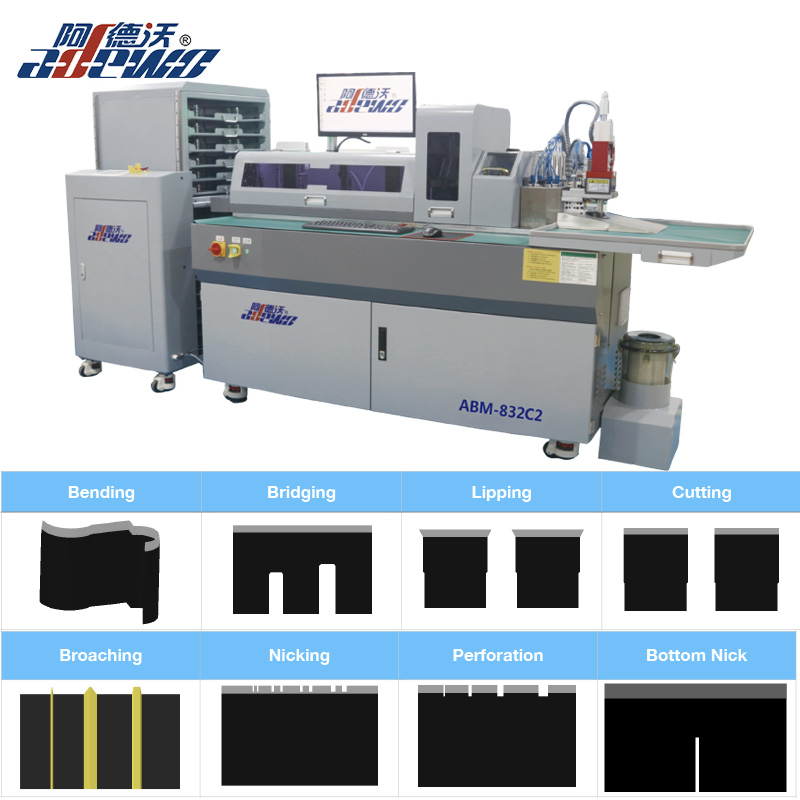
Even a strong machine needs proper use. Operators should keep the working area clean, check material condition, confirm tool setup, and follow recommended maintenance routines. Small habits make a large difference over months and years. A machine that is cleaned, checked, and operated correctly will usually deliver more stable performance than one that is treated only as a production tool with no daily care.
Useful daily operating habits include:
- Confirm that steel rule material matches the machine setting before production starts.
- Check whether the drawing data is correct before running a batch.
- Keep bending, cutting, and related working areas free from debris.
- Inspect finished rule samples before continuing with large-volume production.
- Train more than one operator so production does not stop when one person is absent.
- Record common machine settings for repeat jobs and frequently used materials.
- Contact technical support early when unusual noise, unstable output, or repeated errors appear.
The Latest Auto Bender should be treated as part of a complete production system. The machine, operator, drawing file, material quality, and inspection process all work together. When one part is ignored, the result becomes less predictable. When all parts are controlled, the workshop can build a stronger foundation for repeatable quality.
FAQ About The Latest Auto Bender
Is The Latest Auto Bender suitable for a workshop that still uses manual bending?
Yes, it can be suitable for workshops that want to reduce dependence on manual bending and improve production consistency. The key is to choose a configuration that matches current materials, order types, and operator skill level. For first-time users, training and supplier support are especially important.
Can The Latest Auto Bender help reduce steel rule waste?
It can help reduce waste by improving bending accuracy, cutting consistency, and repeatability. Waste also depends on drawing preparation, operator setup, material quality, and inspection habits, so the best results come from combining machine accuracy with a disciplined workflow.
What industries commonly need an automatic steel rule bending machine?
Common users include packaging die makers, printing plants, label die workshops, gasket die producers, leather cutting die manufacturers, and custom die-making service providers. Any workshop that regularly bends steel rule for cutting or creasing dies may benefit from automation.
How should I know which model is right for my factory?
Start by listing your steel rule height, thickness, common die types, special functions needed, expected output, and most difficult job examples. Sharing drawings or samples with the supplier can make the recommendation more accurate.
Does an auto bender remove the need for skilled operators?
No. It reduces repetitive manual bending work, but skilled operators are still important for drawing checks, setup confirmation, quality inspection, troubleshooting, and production planning. The machine raises the efficiency ceiling, while trained operators keep the process under control.
Why should buyers consider Adewo Automation Equipment Co.,ltd.?
Adewo Automation Equipment Co.,ltd. provides die-making equipment solutions with a focus on auto bender machines and related production needs. Buyers can discuss machine configuration, technical requirements, and production goals before selecting a suitable model.
How Can Buyers Take the Next Step?
Choosing The Latest Auto Bender is not only about buying another machine. It is about making die production more stable, more repeatable, and easier to manage when customer demands become more urgent. If your workshop is dealing with slow manual bending, unstable quality, repeated rework, or limited production capacity, this may be the right time to review your current process and compare a more automated solution.
To discuss machine configuration, steel rule requirements, application details, pricing, or technical support, please contact us today. Adewo Automation Equipment Co.,ltd. can help you evaluate the right auto bender solution for your workshop and provide a practical recommendation based on your real production needs.