
Copyright © 2022 Adewo Automation Equipment Co.,ltd. All rights Reserved.
Links Sitemap RSS XML Privacy Policy

APEC is no longer a distant acronym in Shenzhen. It is on the banners, in the airport, and in the meeting rooms of Qianhai. In November 2026, China hosts APEC for the third time, and for the first time the Leaders' Meeting is being held in Shenzhen. The APEC CEO Summit runs on November 17–18 at the Qianhai International Conference Center, with more than 2,000 business and government representatives expected. The Leaders' Meeting follows on November 18–19.
This is a big meeting by any measure. But the more interesting question for a company based in Shenzhen is simpler: why this city, what did it have to do to get ready, and what changes when the meeting ends?
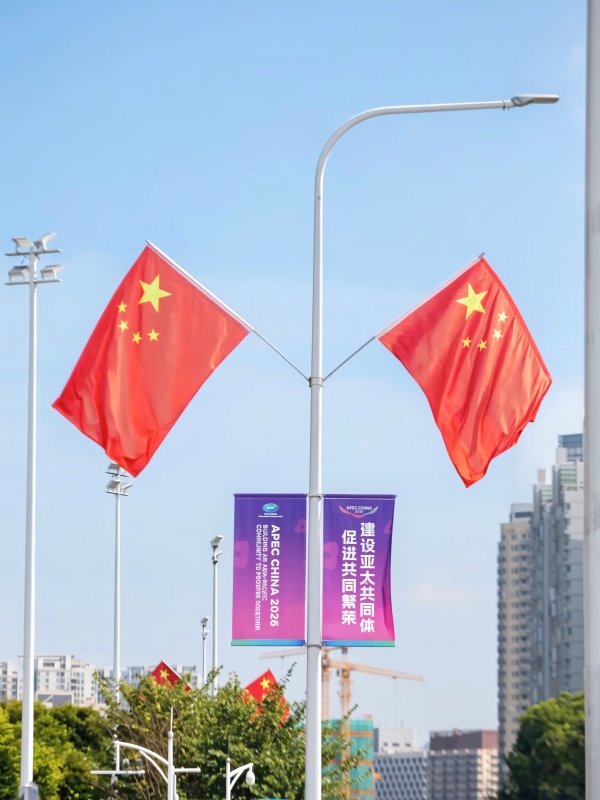
The theme for APEC "China Year" is "Building an Asia-Pacific Community to Prosper Together," with three priorities: openness, innovation and cooperation. The CEO Summit's agenda reads almost like a list of what Shenzhen already does: Asia-Pacific free trade, connectivity, artificial intelligence, the digital economy, the Guangdong-Hong Kong-Macao Greater Bay Area, sustainable development, and the digital-green transition.
The scale of participation reflects that fit. 115 Fortune Global 500 companies are taking part, with representation from all 21 APEC economies and 13 non-APEC economies including the UK, France and Germany. More than 130 Shenzhen companies are on the APEC stage, and 12 APEC economy leaders are attending the CEO Summit.
One detail stands out: this year's CEO Summit will issue a "Shenzhen Initiative" — the first time in the summit's 30-year history that outcomes are released in the form of an initiative, rather than a conventional statement. The name is not incidental. It signals that the business consensus coming out of Shenzhen is meant to feed directly into what leaders discuss.
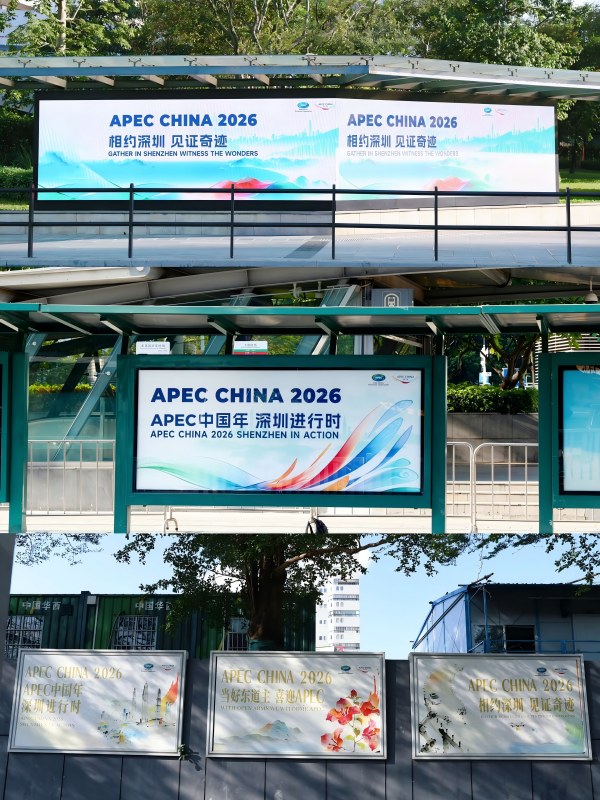
APEC did not choose Shenzhen for symbolism alone. The city's economic ties with the Asia-Pacific are already dense and growing.
In the first three quarters of 2026, Shenzhen's total imports and exports reached RMB 4.65 trillion, up 38.8% year on year, already exceeding the whole of 2025 and making Shenzhen the first mainland Chinese city to surpass RMB 5 trillion in annual foreign trade. Within that total, trade with other APEC economies grew 40% and accounted for nearly 70% of the city's entire foreign trade.
The import side is just as telling. Shenzhen imported RMB 2.24 trillion in the first three quarters, up 70.1%. This is not only a city selling to the world; it is a city buying from it at scale — a "super buyer" for products moving across the Asia-Pacific. At the same time, Shenzhen's own advanced products are finding buyers abroad: exports of 3D printers, digital cameras and smartphones together grew 15.5%.
Behind those numbers is a production and supply-chain base that many APEC economies already rely on. Qianhai, where the CEO Summit is being held, hosts 20 of Shenzhen's 5A-level logistics headquarters — nearly half the city's total — as of September 2026. Shenzhen companies are not just trading with the Asia-Pacific; they are embedded in its production networks, from consumer electronics to new energy and logistics.
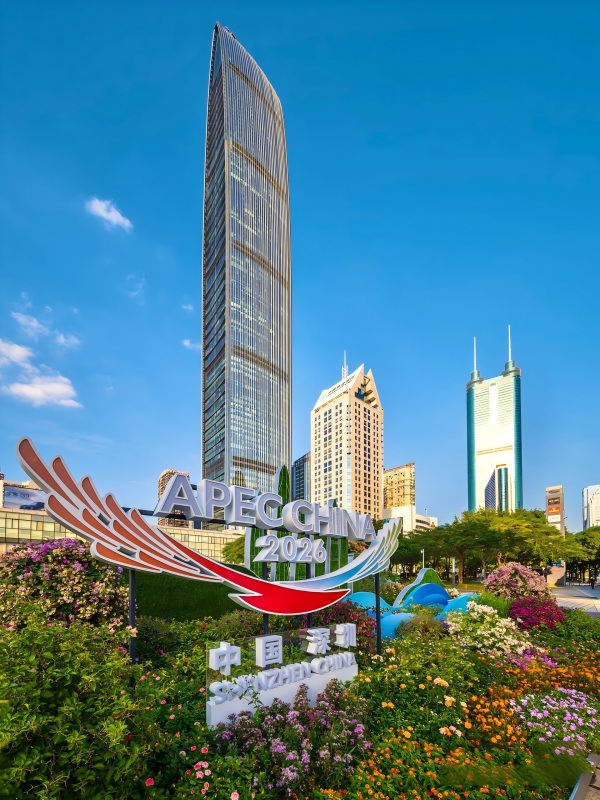
Hosting a meeting of this scale is not a matter of hanging banners. Shenzhen's preparation touched the venues, the ports, the transport system, the power grid, and the daily habits of the city.
The core venues — Shenzhen International Exchange Center, Shenzhen Bay Culture Square, the Qianhai International Conference Center, and the bilateral meeting venues — had their functional layouts optimised and upgraded. Every scenario, every link and every point was run through full rehearsals to ensure the meeting week would move without friction. The approach was deliberate: use existing resources, improve what was there, and keep the footprint low rather than building spectacle.
The ports received the most visible upgrade. Across nine ports — air, land, sea and rail — dedicated channels for APEC delegates were set up. At Bao'an International Airport, checked baggage is now screened early, and arriving passengers with no anomalies clear in under 15 minutes. At the new Huanggang Port, six APEC dedicated channels compress clearance to about five minutes, with self-service lanes at roughly 20 seconds, operating 24 hours so delegates, international media and business representatives can arrive and move on at any hour. More than 14,000 foreign-language signs were upgraded across the city's ports.
Transport inside the city adjusted too. During the meeting week, some metro lines run at two-minute headways, 50 new feeder routes were added, bilingual announcements and bilingual station signage cover the entire network, and every metro line accepts foreign bank cards at the gate — no cash, no queue at a ticket machine. The power grid was not left out: Southern Grid reserved 89 million kWh of green power and certificates so that the main venues, transport hubs and reception venues run on 100% green electricity during APEC week.
The human layer may be the most distinctively Shenzhen part. The city's 4.2 million registered volunteers mobilised for APEC, including more than 4,000 international volunteers trained in multilingual etiquette and foreign-related service. 148 city volunteer service stations completed bilingual upgrades. In charging stations and rider rest areas, delivery riders and taxi drivers used idle minutes to learn basic English greetings on their phones.
Local companies were part of the preparation as well. At the APEC news center — 15,000 square metres serving nearly 5,000 journalists — Shenzhen-made LED screens, panoramic cameras and wireless audio equipment did the visible work of showing the city's tech base to the world. Humanoid robots operated coffee machines; AI eyewear fitting was on display.
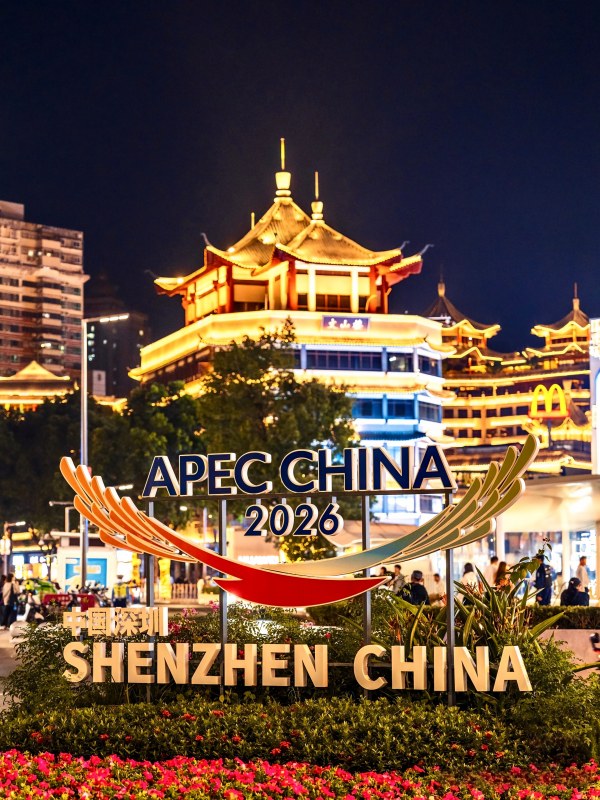
For companies, the most concrete APEC dividend is not a communiqué. It is the ability to move people and projects across borders with less friction.
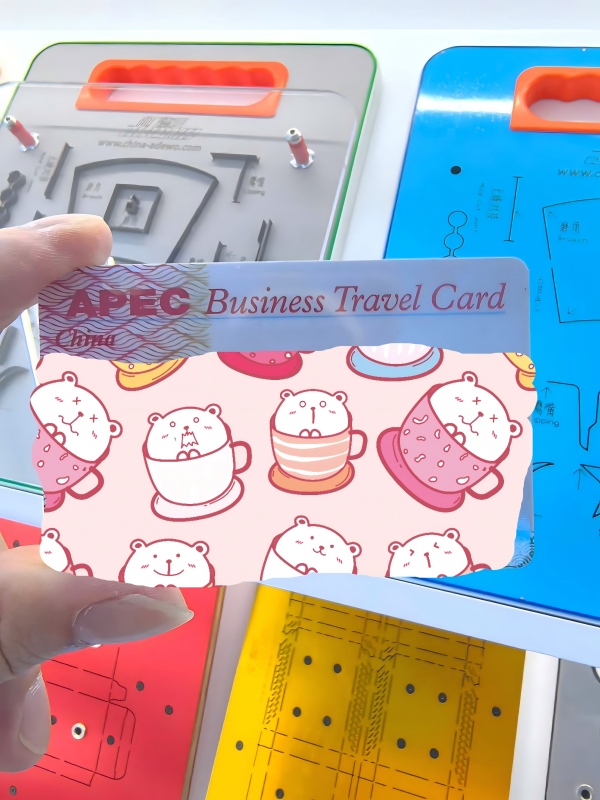
Since November 1, 2026, the maximum stay in China for eligible APEC Business Travel Card holders has been extended from 60 days to 90 days. For teams that need to combine factory visits, client meetings and project follow-ups across several APEC economies in one trip, that extra month is not a marginal improvement — it changes what a single trip can accomplish.
During the meeting, card holders can use dedicated channels at ports, with dedicated lanes for business vehicles and multilingual support at port service desks. Shenzhen also introduced "tap-and-go" departure tax refunds at the airport — a first in mainland China — so foreign visitors can complete the refund in seconds rather than days.
Our company uses the APEC Business Travel Card in our own work, and the benefit is best described in ordinary terms: one less application before departure, a little more room in the calendar, and a travel schedule that follows business needs rather than visa timelines. For a company in Shenzhen doing work across the Asia-Pacific, that is the APEC effect that shows up every month, not just during meeting week.
APEC meeting week will end. The Leaders' Meeting will produce its outcome documents, the Shenzhen Initiative will be handed over, and the delegates will leave. But the preparation Shenzhen did for this week was not designed to disappear with the delegates.
The two-minute metro headways will normalise, but the bilingual signage and foreign-card gates remain. The APEC dedicated channels at ports served a week of delegates, but the early baggage screening and faster clearance at Bao'an Airport are permanent upgrades to how the city receives people. The 4.2 million volunteers will go back to their ordinary routines, but 4,000 of them now carry trained multilingual service capacity that did not exist before. And Qianhai, the physical centre of APEC week, has been building the connective tissue — international signage, cross-border professional recognition, one-stop platforms for companies going global — that companies use long after the banners come down.
Shenzhen did not become an APEC host city by accident. It became one because the Asia-Pacific is already part of its daily economy. The meeting made that relationship visible for a week. What Shenzhen prepared for the week — the ports, the screens, the volunteers, the green power, the rehearsals — is the same infrastructure that a company based here draws on when it hires across borders, ships a product, meets a client, or sends a colleague on a trip that needs to happen next month rather than after a visa queue. The meeting is the occasion. The capacity is the point.
Copyright © 2022 Adewo Automation Equipment Co.,ltd. All rights Reserved.
Links Sitemap RSS XML Privacy Policy